
The general elections in April/May 2024 are expected to add volatility to the Indian markets, keeping investors on their toes.

The biggest spender was Tata Motors, with Rs 4,224.6 crore assigned under the R&D head.

The Union government is projected to share about 32 per cent of central taxes with states during the financial year 2024-25 against the 15th Finance Commission's recommendation of 41 per cent. The Revised Estimates (RE) for FY24, too, show a similar share of states in the central taxes at 32 per cent. In absolute terms, however, there has been an increase in the amount devolved to states compared to the Budget Estimates (BE) for FY24 at Rs 11 trillion.

'India has the potential to reduce its trade deficit with China by $8.4 billion in FY21.'

Of the eight RBI governors who have held office since the 1991 economic liberalisation, Bimal Jalan had the longest stint and S Venkitaramanan, the shortest. Current Governor Shaktikanta Das will overtake Bimal Jalan before completing his second term in December, points out Tamal Bandyopadhyay.

The economy is likely to log in a tepid 6 per cent growth next fiscal, in line with the consensus estimates, rating agency Crisil said on Thursday. The agency also sees the economy averaging a growth rate of 6.8 per cent over the next five fiscals. Crisil further said it expects the corporate revenue to log in double-digit rise again next fiscal.

The Union government could target a fiscal deficit of 5.8-6 per cent of nominal GDP for 2023-24, and it should continue its capital expenditure push and look to simplify the personal income tax regime, economists recommended Finance Minister Nirmala Sitharaman and her team during their pre-Budget interaction on Monday. Starting last week, Sitharaman had eight pre-Budget consultations this time. More than 110 invitees representing seven stakeholder groups participated in these meetings, the finance ministry said in a statement. The stakeholder groups included representatives and experts from agriculture and agro-processing industry; industry, infrastructure & climate change; financial sector and capital markets; services and trade; social sector; trade unions and labour organisations; and economists.

Is the worst over for Indian banks? The past two years saw them ride on treasury trades as deposits soared and credit growth dipped sharply. Gross and net non-performing assets (NPAs) moved south, and the provision coverage ratio (PCR), capital buffers, and profitability indicators are back at pre-pandemic levels. So, what's the plot ahead?

According to the global business information, knowledge and insight provider, India is likely to achieve an average growth rate of around 7.5 per cent during FY15-FY20.

'Government's focus should be on the expenditure side in this Budget, not so much on the taxation side.'

The country may become militarily impressive, pile on GDP and the durbar of the ruling party may fill with the wealthy indebted to the rulers for their riches. But the spontaneous camaraderie of a free people will diminish and with it, our shared ownership of the country, warns Shyam G Menon.

'If you are going to have only a handful of telecom players on whom the entire dream of Digital India rests, it's important they are financially sustainable.'

Thirteen companies have joined the Rs 1-trillion-plus market capitalisation club this year, so far. This even as the benchmark Sensex has gained less than 3 per cent on a year-to-date basis, underscoring the bullish undercurrent in the broader market. The trend shows a harsh second wave of Covid-19, subsequent lockdowns, and hit to the economic activity has made little dent into India Inc or shareholders' wealth. At the start of the year, there were 29 companies with a market value of more than Rs 1 trillion.

France has eased the norms for mobility of employees to the country.

India Inc's debt-to-equity ratio has fallen, from 0.92 in FY15 to 0.88 in FY16.

'Good investment opportunities should not be missed.'
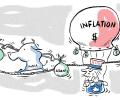
'The biggest risk to the Indian markets from a 12-18-month view is that the current government does not get re-elected, or loses in a way that is not represented at all in the next central government.'

'A CEO is successful if he is able to retain the confidence of his shareholders. And the shareholders of India Inc have backed their prime minister-CEO to the hilt,' says Sudhir Bisht.

Even those who advise caution believe the current PE multiples are justified by India Inc's healthy returns
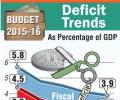
Finance Minister Arun Jaitley presented the Budget today.
India Inc will contribute 82 per cent of the total tax revenues of the Centre this fiscal and the share of income tax still accounted for a mere 18 per cent as majority of the population was out of the tax net.

While welcoming Prime Minister Narendra Modi's announcement on Saturday to celebrate January 16 as National Start-up Day, six years after the Start-up India Action Plan was launched by the government, stakeholders in the ecosystem say that more needs to be done at the policy level to unleash the next phase of growth in the sector. "The Start-up India programme's launch in 2016 was a turning point - that is when the promoter came to be known as the founder in the country and the word 'entrepreneur' entered the common lexicon. "But now we need a Start-up India 2.0 now for the next phase of growth of the ecosystem", said Siddarth Pai, managing partner of venture capital (VC) firm 3one4 Capital. Pai says that Startup India 2.0 must look at promoting Startups headquartered in tier II,III & IV cities and solving the problems of Bharat.

Expressing disappointment over the RBI's move for not cutting the key policy rates, India Inc on Tuesday asked the government to take immediate action to revive growth and boost investments.

The projected increase for 2020 is lower than the average salary hike that graduates of top business schools have managed - at around 12 per cent.

The study claims that from its peak of 18 per cent of gross domestic product in 2008, the crony capitalists' wealth is now down to three per cent

While weather forecasters remain divided on how the monsoons will play out in India over the next few months, analysts believe the news at the current juncture - at best - can trigger a knee-jerk reaction in the markets. They believe it is too early to say whether the sub-par monsoon on account of El Nino can seriously dent the market sentiment in the short-to-medium term. "These are just initial forecasts and we will have another round / status update from the weather forecasters a month down the line.

The increased tax target comes at a time when consumer spending and sales growth are slowing down and most companies are not investing in new capacities.

The Nifty Index features 50 of the largest companies in the country and represents close to 50 per cent of total market capitalisation. It is now trading at valuations that could only be justified if India Inc grows earnings at better than thrice the GDP growth rate. This is extremely unlikely, says Devangshu Datta.

The govt's willingness for change and 'feel good' factor has boosted sentiments.

In March this year, Worldline India launched Vabox (Voice Alert Box): merchants will now get instant audio alerts on the settlement of UPI (Unified Payments Interface) payments via QR codes in languages of their choice when customers check out. "They needn't worry whether the amount has been credited to their account," says Gulshan Pruthi, the firm's executive vice-president. The French payments giant will roll out 500,000 Vaboxes in the initial phase.

An obscure US-based firm with just 19 employees, USD 15 million in revenue and hosting just a one-page website, wants to invest USD 500 billion in equity into India's National Infrastructure Pipeline (NIP).

'The selling in India may emerge as soon as the RBI reverses its interest rate stance.'

India Inc is automating and squeezing more output from its workers and so needs fewer of them, finds out IndiaSpend Team.

'The recent correction in indices has made the markets cheaper to invest for the long term.'

Crisis of growth is worsened by the challenging global environment and policy missteps. Returning to 9 per cent growth trajectory will be a tall order.

'The markets have corrected almost 8-9 per cent from their highs, so one can accumulate quality stocks at reasonable prices.'

India Inc's investment project announcement falls to Rs 11.3 trillion. In the coming months, the pace of investments would depend on how soon consumption demand picks up and private sector investment ramps up investment in infrastructure.

'People are doing a lot of trading.' 'Short-term euphoria can be seen.' 'Retail participation is best through MFs and PMS.'

India has more service companies, such as IT and healthcaresectors, which always trade at a premium to the overall market.

Rajan said RBI is in the process of creating a framework which will make the sustainable growth possible.
 © 2026 Rediff.com - Advertise with us - Disclaimer - Privacy Policy - Sitemap - Feedback - About us - Terms of use - Grievances